Cool Features of Bridges
1 Transparent Bridges
These kinds of bridges are not visible to other devices on the network and will always automatically handle data routing, which is based on Media Access Control Address. Furthermore, they are effective in maintaining any network transparency without demanding manual configuration.
Use Case: They are ideal options for networks where devices are required to be connected without knowing the bridge's presence.
2. Source Routing Bridges
These bridges are designed for the token ring networks, which were developed by IBM.
They set in the whole route. Inside the data frames while guaranteeing that your data follows an exact path.
Use Case: These types of bridges are well suited for those networks where precise routing control is needed.
3. Translational Bridges
These kinds of bridges help in converting your data between diverse network systems, like networking technology and token-based networking. Furthermore, they allow connectivity between networks using diverse protocols.
Use Case: It is also important to take part in diverse network technologies within a solo networking system.
Some of the Best-Rated Network Bridges Trending in the UK
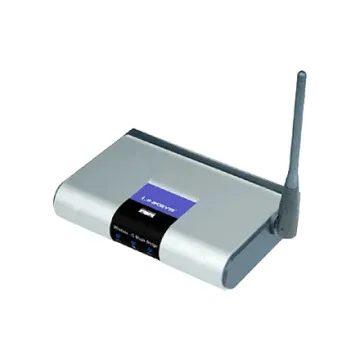
1. WMB54G - Linksys Wireless - G Music Bridge
This top-notch Linksys WMB54G is an amazing wireless music bridge, which is manufactured to stream audio content from your PC to your home-based stereo system wirelessly. It has good functionalities that will support both 802.11b and 802.11g wireless specifications while guaranteeing you good matching with a wide range of your networks.
Specifications:
Wireless Standards: It will give you 802.11b/g networking standards.
Network Interface: If we talk about the ports, then it contains a wireless + RJ-45 network interface.
Ports: It also includes left and right RCA audio output, one line out, a reset button, and more.
Security: It will give you Wired Equivalent Privacy (WEP) with a 128-bit key.
Operating System Compatibility: Its Windows 2000/XP with SP1 compatibility makes it outstanding.
Minimum System Requirements: For using this, your system should have at least a 400 MHz CPU, 128 MB RAM, a CD-ROM drive, etc.
Dimensions: It has a dimension of 5.57 inches in width, 5.12 inches in height, and 3.76 inches in depth.
Weight: It is around 0.23 kg.
Power: It has a 12V direct current, 500 milliamps.
2. F5D7330 - Belkin 802.11g Wireless Ethernet Bridge
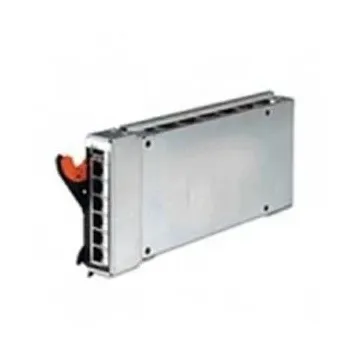
This other exceptional Belkin F5D7330 is a Wi-Fi-to-Ethernet bridge that will connect wired devices to any wireless network. It works with the 802.11g Wi-Fi standard that will provide a maximum speed of 54 megabits per second.
Specifications:
Wireless Standard: It will give you the IEEE 802.11g Wi-Fi specification, which makes it superior.
Data Transfer Rate: It will give you up to 54 Mbps of speed for transfer rate.
Network Interface: Also, it contains a wireless transmission port, which enhances its features.
Ports: It contains numerous network interface ports for connecting your wired devices.
Security: Also, it will support WEP encryption.
Compatibility: It is designed for use with various devices where a wireless connection is required.
3. 2857-2100 - IBM Fiber Channel SAS Bridge
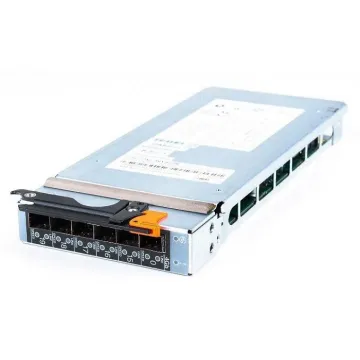
This highly recommended IBM Fiber Channel SAS Bridge is good for connecting your Fiber Channel storage systems to Serial Attached SCSI devices. Also, it will facilitate you with a data transfer option between these two technologies while improving storage system flexibility.
Specifications:
Interface: Its interface is based on Fiber Channel, which will help to connect it with SAS.
Functionality: Moreover, it will give you good connectivity between Fiber Channel and your SAS storage systems.
Compatibility: Furthermore, it is designed to be utilized in enterprise storage places.
Performance: Its qualities will give your best performance overall.
How to choose a perfect network bridge for you?
Firstly, you should verify your requirements regarding your devices and the size of the industry. Then, you should consider the best-performing device for your networking.
FAQs
Will Bridge Improve my Network Security?
Yes, bridges will surely enhance your network safety and provide you with filtering traffic options based on LAN addresses and will also prevent illegal access to certain network sectors.
Are Bridges More Expensive Than Other Networking Devices?
Generally, yes. According to an online survey, people say that bridges are more expensive than centers or repeaters. However, it gives advanced features like traffic management and protocol conversion.