
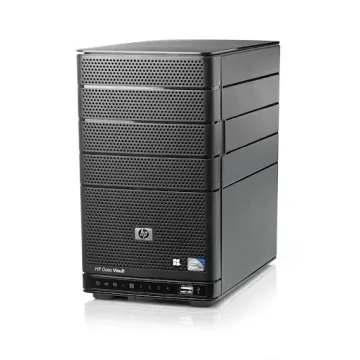
q2053a
Q2053A - HP Storageworks X310 1tb Data Vault 1 Drive 3 Empty Bays Intel Dual-core Atom Processor 2GB Dram-inch
Request For QuotationIn data-driven operations, the need for highly efficient, secure and centralized data storage systems has become of vital importance. For this, Network attached storage systems are the most popular choice. At BulkDevices, you can find NAS storage systems in both new and refurbished conditions at very affordable prices.
Q2053A - HP Storageworks X310 1tb Data Vault 1 Drive 3 Empty Bays Intel Dual-core Atom Processor 2GB Dram-inch
Request For Quotation
70BC9000NA - Lenovo Diskless System Network Storage
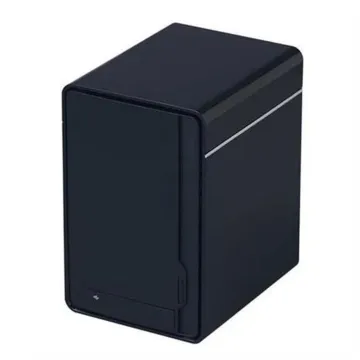

STAH4000101 - Seagate BlackArmor NAS 420 Network Storage Server

SS4200ENA - Intel Entry Storage System SS4200-E NAS server Serial ATA-300
Request For Quotation
C1119M - HP 220mx No Drives 24 Slot StorageWorks 9.1GB Entry-Level Optical Storage Jukebox

AP845B - HP MSA P2000 G3 Fibre Channel Dual Controller LFF Modular Smart Array

dns-325 - D-Link ShareCenter DNS-325 Network Storage Server 1.20 GHz RJ-45 Network USB

172642XB905 - IBM System Ds3400 12-Bays 4GB Fibre Channel Dual Controller Hard Drive Storage

42C1800 - IBM QLogic 10GB PCI Express x8 Low Profile Half-length Ethernet Adapter

498472-001 - HP 2-Port I/o Module Board Assembly for Storageworks Mds600 Ssa70

Network-attached storage or commonly known as NAS devices is a single unit that provides a file-level storage server that is connected to a computer network. This provides data accessibility to a group of varying heterogeneous users. At the basic level, high-capacity NAS is different from other storage systems like SANs in the sense that it provides file-level storage, which means that the users can access in the form of files, instead of blocks which is provided by SAN.
NAS storage systems are best used for fire sharing, collaboration, and backup. NAS for small businesses is especially a good choice because they are quite affordable and easy to use even for novice users.
Reliable NAS devices are a type of self-contained device, which means that they can contain one or more than one hard drive. In the unit, the hard drives are connected to the motherboard of the NAS system and the device is itself connected to the network.
When a user tries to access the files on the device, they first send a request to the NAS device over the network. After that, it gets the data from the NAS hard drive and sends it back to the user.
If you want to buy Network Attached Storage NAS devices online from trusted suppliers, then BulkDevices is the best place to fulfil all your needs. At our esteemed store, we have a variety of products ranging from enterprise NAS solutions to NAS for home offices. We provide all of our products at wholesale prices, so everyone can find devices for their specific needs very cheaply.
Data Protection and Redundancy: NAS devices provide very efficient protection against disk failures. They often have built-in RAID arrays to provide redundancy, which is very essential to provide data security.
Scaleability: A great advantage of using NAS devices is that they are very flexible and you can easily attach more hard drives to scale up your system.
Remote Access: Most NAS storage systems have enabled remote access, which means that users can access files from outside the local network.
Buying NAS storage solutions can be a little bit tricky, and you should always keep some factors in mind before purchasing any device.
Performance: The data transfer speed is among the most important factors to consider. Before buying the device check whether the hard drives in the NAS system are HDDs or SSDs, as they heavily impact the overall performance.
Compatibility: make sure the device you choose is compatible with the operating system of your network and other applications
Redundancy: Always choose devices that provide RAID configuration to safeguard your data from disk failures and other problems.