Memory

Memory

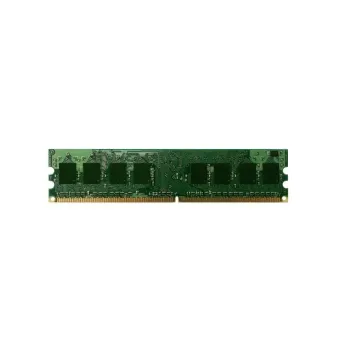
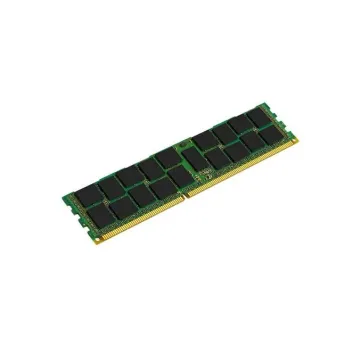
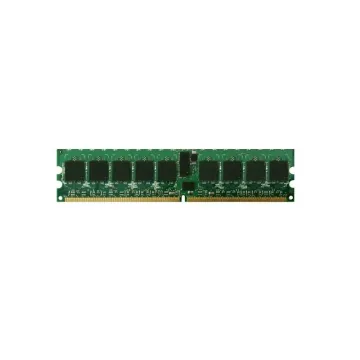
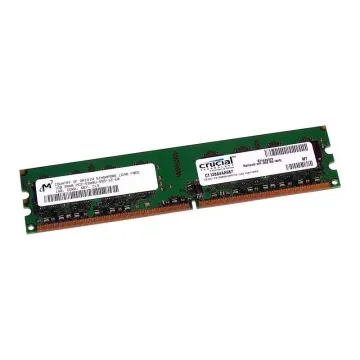
Memory is an important part of a computer that is responsible for preserving and extracting essential data for numerous work processes. Moreover, these devices also serve as temporary or permanent storage devices, allowing the system to access, process, and manage information efficiently. Also, the absence of sufficient memory will undoubtedly hinder computers from performing functions effectively, resulting in a low processing rate and the inability to multitask. Nevertheless, knowing the various types and their divisions of memory is fundamental in improving the processing capabilities. So, let's discuss the numerous memory classifications and explore the specifics of server, desktop, and laptop memory.

Read more about Memory

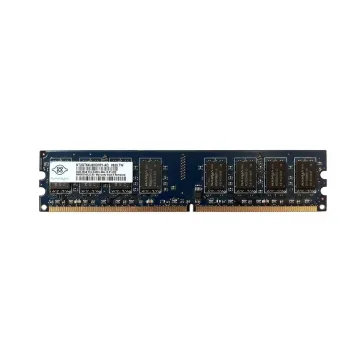
  • NT2GT64U8HD0BY-AD Nanya Technology Corporation

    NT2GT64U8HD0BY-AD

    NT2GT64U8HD0BY-AD - Nanya 2GB DDR2-800MHz PC2-6400 non-ECC Unbuffered CL6 240-Pin DIMM 1.8V Dual Rank Memory Module

    £85.54 Incl. VAT: £102.65
    Add to Cart
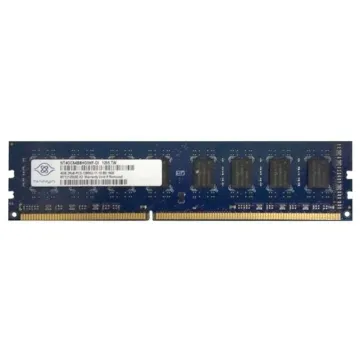
  • NT4GC64B8HG0NF-DI Nanya Technology Corporation

    NT4GC64B8HG0NF-DI

    NT4GC64B8HG0NF-DI - Nanya 4GB DDR3-1600MHz PC3-12800 non-ECC Unbuffered CL11 240-Pin DIMM 1.35V Low Voltage Dual Rank Memory Module

    £57.00 Incl. VAT: £68.40
    Add to Cart
  • 902FX Dell

    902FX

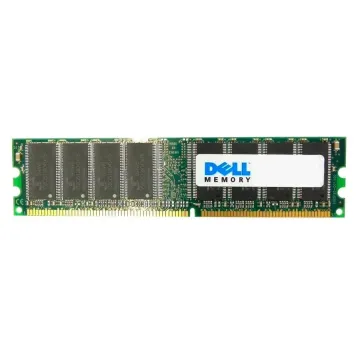
    902FX - Dell Dimension 8100 512MB Memory Module 600MHz

    £87.37 Incl. VAT: £104.84
    Add to Cart
  • M393B1K73CHD-YF8 Samsung

    M393B1K73CHD-YF8

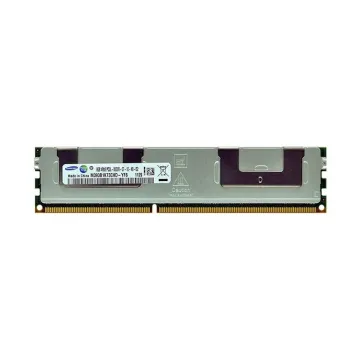
    M393B1K73CHD-YF8 - Samsung 8GB DDR3-1066MHz PC3-8500 ECC Registered CL7 240-Pin DIMM 1.35V Low Voltage Quad Rank Memory Module

    £45.00 Incl. VAT: £54.00
    Add to Cart
  • HYMP112U64CP8-S6-AB Hynix

    HYMP112U64CP8-S6-AB

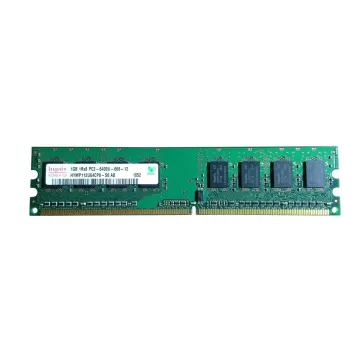
    HYMP112U64CP8-S6-AB - Hynix 1GB DDR2-800MHz PC2-6400 non-ECC Unbuffered CL6 240-Pin DIMM 1.8V Single Rank Memory Module

    £65.12 Incl. VAT: £78.14
    Add to Cart
  • M378T5663EH3-CF7 Samsung

    M378T5663EH3-CF7

    M378T5663EH3-CF7 - Samsung 2GB DDR2-800MHz PC2-6400 non-ECC Unbuffered CL6 240-Pin DIMM 1.8V Dual Rank Memory Module

    £54.00 Incl. VAT: £64.80
    Add to Cart
  • HYMP512U64P8-E3 Hynix

    HYMP512U64P8-E3

    HYMP512U64P8-E3 - Hynix 1GB DDR2-400MHz PC2-3200 non-ECC Unbuffered CL3 240-Pin DIMM 1.8V Memory Module

    £50.00 Incl. VAT: £60.00
    Add to Cart
  • 39M5808 IBM

    39M5808

    39M5808 - IBM 1GB DDR2-400MHz PC2-3200 ECC Registered CL3 240-Pin DIMM 1.8V Memory Module

    £85.54 Incl. VAT: £102.65
    Add to Cart
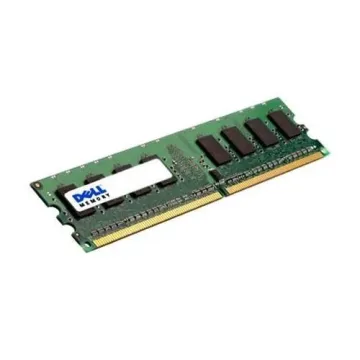
  • M393T2950BZ0-CCC Samsung

    M393T2950BZ0-CCC

    M393T2950BZ0-CCC - Samsung 1GB DDR2-400MHz PC2-3200 ECC Registered CL3 240-Pin DIMM 1.8V Single Rank Memory Module

    £50.00 Incl. VAT: £60.00
    Add to Cart
  • 18187746I HP

    18187746I

    18187746I - HP 64MB PC800 RDRAM-800MHz ECC 45ns Rambus 184-Pin RIMM Memory Module

    £75.36 Incl. VAT: £90.43
    Add to Cart
  • CT12864AA667 Crucial Technology

    CT12864AA667

    CT12864AA667 - Crucial Technology 1GB DDR2-667MHz PC2-5300 non-ECC Unbuffered CL5 240-Pin DIMM 1.8V Memory Module

    £47.00 Incl. VAT: £56.40
    Add to Cart

Memory Classification

Data storage units, or memory, can be generally categorized based on their volatility, mutability, user-friendliness, and future use:

Volatile vs. Non-Volatile Memory


  • Volatile Memory: It requires power to preserve stored information. Also, when the system is powered off, the data is lost. However, the primary example is Random Access Memory (RAM), which will provide fast read and write access for active processes.

  • Non-Volatile Memory: It stores data even when the system is powered down. Examples include Read-Only Memory (ROM), flash memory, and hard disc drives (HDDs).

    Mutable vs. Immutable Memory


  • Mutable Memory: It allows both read and write operations. Furthermore, this RAM is mutable, allowing dynamic data management.

  • Immutable Memory: These devices were utilized primarily for reading purposes only while data was written during manufacturing or through specific processes. Also, the ROM is typically immutable under standard operation conditions.

    Random Access vs. Sequential Access Memory


  • Random Access Memory: It allows data to be read and written in any order while giving quick access times. For deep understanding, the RAM is an ideal example.

  • Sequential Access Memory: Data is read or recovered in a fixed order, one step at a time. Magnetic tapes are a classic example, where accessing specific data requires reading through preceding information.

    Server Memory


    Server memory is another kind of memory to handle the demanding workloads and multitasking requirements of server surroundings:

  • Error-Correcting Code (ECC) Memory: ECC memory senses and corrects common kinds of inner data corruption while improving data reliability, which is an important feature for servers where data configuration is a top priority.

  • Registered (Buffered) Memory: It connects a DRAM register with the system’s memory controller through a “registered” module, which helps stabilize electrical loads, enabling servers to accommodate greater memory without performance drawbacks.

  • High Capacity and Scalability: Compared to laptop and desktop memory, server memory modules are usually of much higher capacity. This increases the capability to manage large databases and handle virtualization and allows many users to access them simultaneously.

  • Advanced Memory Technologies: They are also among the first to adopt new generations of memory; for instance, servers are the first to use DDR5 because it has more bandwidth and is more efficient at producing power than DDR4. 

    Desktop Memory 


    Desktop memory is versatile, striking the right balance between performance and cost for a variety of users. 

  • DIMM Form Factor: Dual Inline Memory Module is a type of desktop memory used with desktops. DIMMs have larger physical dimensions, allowing more memory chips to sit on the module. In addition, it enabled faster memory capacities and data transfer rates.

  • Non-ECC Memory: Non-ECC memory must be the most used type of memory in computers. It is economically friendly and sufficient for general computing, which doesn’t need all the precision of data integrity.

  • Upgradeable and Customisable: Desktop computers contain multiple random-access memory holes, which means users can connect more RAM and can upgrade the system's abilities for gaming, content creation, and multitasking.

  • DDR4 and DDR5: Advanced desktops also feature DDR4 memory, while newer systems transition to DDR5, which provides higher speeds and better-quality efficiency.

    Laptop Memory


    Laptop memory is designed with compactness and energy proficiency in mind:

  • SO-DIMM Form Factor: Laptops employ Small Outline DIMMs (SO-DIMMs) with a greater density compared to desktop DIMMs to suit the narrower designs of portable devices.

  • Low Power Consumption: In addition, the memory modules used in laptops are further enhanced to operate at lower power levels in order to get optimal battery life, which is necessary for mobile computing.

  • Limited Upgradeability: A lot of modern laptops have the memory permanently soldered to the motherboard, which greatly limits or completely removes opportunities for upgrading. So, if you are choosing a laptop, consideration of future memory requirements is essential for you if you have a wish to upgrade, but it isn't always an option.

  • Performance Considerations: Besides, laptop memory may be somewhat slower than desktop memory due to having higher latencies; many technological innovations have closed off the gap in laptop performance, which makes them ideal for use with demanding applications.

    Overall, by understanding memory classifications and the specific attributes of server, desktop, and laptop memory, you may select the suitable devices for your computing requirements. Moreover, server memory dependability, potential, and capacity give flexibility and performance, and laptop memory focuses on compactness and energy efficiency. In short, if you stay informed about the latest memory technologies, such as the transition from DDR4 to DDR5, it can further enhance system performance and future-proof your investment. Consequently, if you are looking to purchase memory devices, then you should consider getting one through the Bulk Devices, as we have a premium collection of these devices at affordable rates. So, order now.